- A control panel build starts from electrical schematics, a panel layout, a BOM with approved brands and a wire and label standard, and the factory builds exactly to those.
- Panel standards such as UL 508A, IEC 61439 and IEC 60204-1 describe design and construction rules, and any listing or declaration must be shown by the factory, not assumed.
- Testing covers continuity, insulation or dielectric tests and a functional run before shipment, with a test report in the handover package.
- Component sourcing, lead times for breakers, drives and PLCs, and who buys them often decide the schedule more than the wiring does.
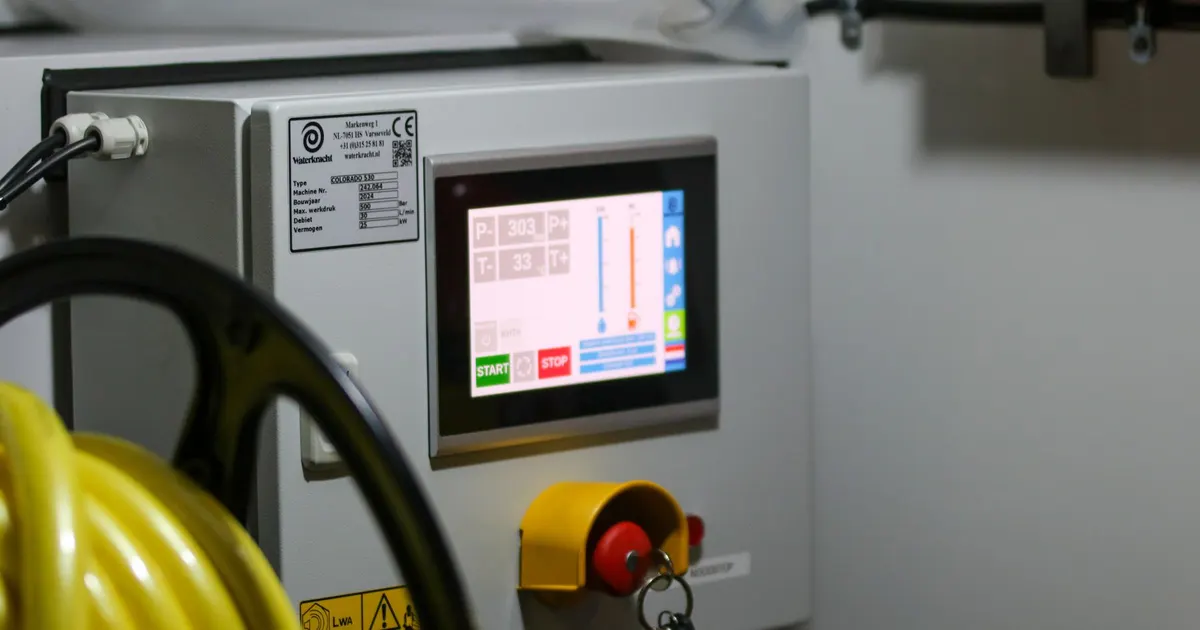
Control panels are the electrical heart of machines, production lines and building systems. They look like a cabinet full of neat rows of DIN rail parts, but they are also a place where small build choices, such as a wrong wire color or a loose terminal, cause hours of commissioning trouble. Several Vietnamese EMS and panel shops build panels for export, and buyers use them for machine builders’ cabinets, control cabinets and distribution boxes.
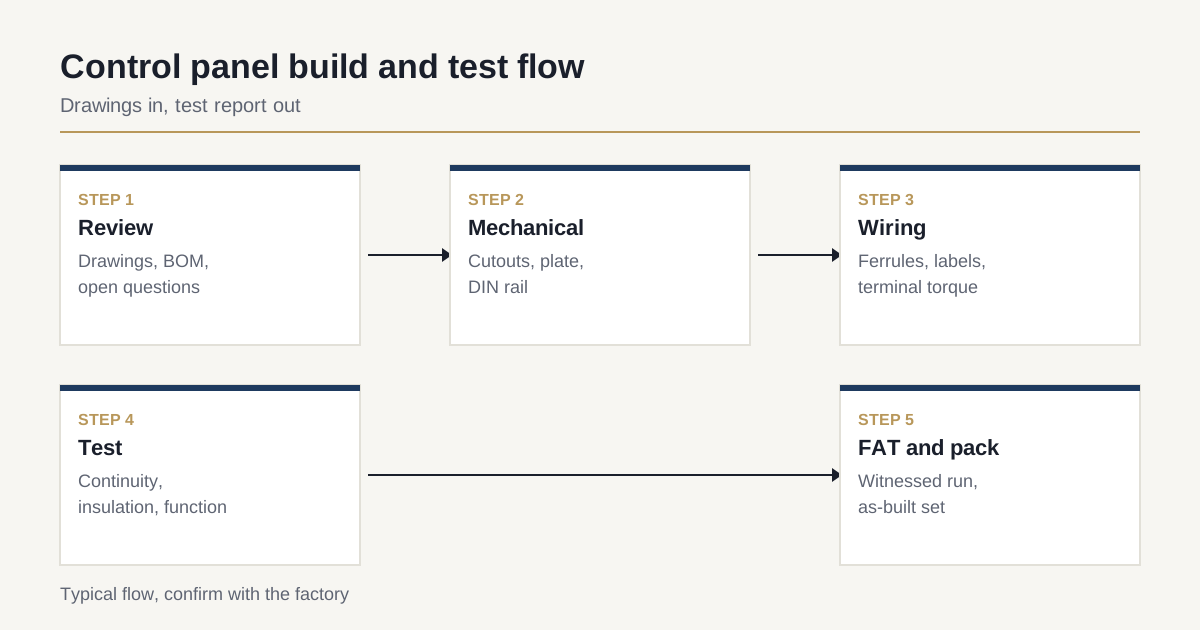
This article covers what a panel build needs from the buyer, which standards matter, how the build and test flow runs and how to brief a factory. Details of electrical design remain with your engineer, and any claim of compliance needs checking against the standard and the factory’s documents.
What a control panel build includes
- Enclosure, with cutouts, mounting plate and door fittings
- DIN rail components: circuit breakers, contactors, relays, power supplies, terminal blocks
- Automation parts: PLC, I/O modules, drives, HMI
- Wiring in the cabinet with ferrules, labels and cable duct
- Field wiring terminals, glands and cable entries
- Labels, nameplates and warning signs
- Testing, documentation and packing
In a box build program this sits next to PCBA and cables, since many industrial products combine a control cabinet with custom boards or harnesses. The box build assembly guide covers the wider flow.
Documents the factory needs
| Document | Why it matters |
|---|---|
| Electrical schematics | The wiring truth, with wire numbers and terminal IDs |
| Panel layout drawing | Component positions, duct runs, drilling and cutouts |
| BOM with manufacturer and part number | Avoids brand and rating swaps |
| Wire list or wire spec | Gauge, color, insulation rating and ferrule type per circuit |
| Label and marking standard | Wire markers, device tags, nameplate text and language |
| Enclosure data | Size, material, rating such as NEMA or IP, finish |
| Test requirements | Checks, limits and the form of the report |
| Applicable standards | Which rules the build follows, as set by your market |
Schematics from an ECAD tool, along with an exported BOM and wire list, keep errors down. Hand sketches lead to guesses.
Standards: what they are and what they are not
- UL 508A covers industrial control panels for use in North America. Panel shops can operate under a UL program, and a listed panel carries a mark. Ask for the shop’s UL file, then verify it with UL.
- NFPA 79 covers electrical standard for industrial machinery in the US, which many machine panels follow.
- IEC 60204-1 covers safety of machinery electrical equipment, widely used in Europe and Asia.
- IEC 61439 covers low-voltage switchgear and controlgear assemblies, used for power distribution panels and similar.
Which one applies depends on the market and the machine. The factory can build to your drawings under any of them, but design verification, listing and declarations belong to specific roles. Ask who carries the responsibility for the declaration of conformity or the listing, and put the answer in writing. Do not accept claims of a certification without documents, and never assume.
Design points that save trouble
- Short circuit current rating (SCCR). In the US, the panel needs a rating for how much fault current it can withstand, and it depends on the weakest part. Provide the target, and ask the factory to confirm the parts support it.
- Wire sizing and color. Follow the standard for your market, and specify the gauge and insulation. The wire harness guide covers crimps and testing, and the UL wire style guide covers wire specs.
- Ferrules. Crimped ferrules on stranded wire keep terminals reliable. State the crimp tool and a pull-test sample.
- Spacing and heat. Leave room around drives and power supplies, and check the enclosure temperature rise, with fans or filters where needed.
- Segregation. Separate power and signal wiring, and plan shielding and grounding of drive cables.
- Spare capacity. Leave space and terminals for future additions.
The build flow
- Review and clarification. The factory checks drawings, flags errors and lists open questions.
- Material. Parts are ordered or received, checked against the BOM and kitted.
- Mechanical prep. Drilling, cutouts and plate mounting.
- Mounting. DIN rail, duct and components placed per layout.
- Wiring. Cutting, ferrules, labels and terminations to the wire list.
- Inspection. Visual check against the schematic, torque check of terminals.
- Testing. Continuity and insulation checks, then power-up and a functional test.
- Documentation and packing. As-built drawings, test report, labels and protective packaging.
Torque on terminal screws matters. Many component makers publish a value for each terminal, and the factory should use a calibrated driver. Loose terminals are a common cause of heat and nuisance trips.
Testing before shipment
| Test | What it checks |
|---|---|
| Visual and label check | Parts, positions, labels and wire markers match the drawings |
| Continuity | Every wire connects as the schematic shows |
| Insulation or dielectric test | Isolation between live parts, at the level the standard and design require |
| Functional test | Power-up, I/O checks, interlocks and drive start with a simulated load |
| Factory acceptance test | A witnessed run with the buyer, by video or on site, against a written procedure |
Hold a factory acceptance test, called FAT, for complex panels. Agree the procedure, the pass criteria and how failures are recorded before the build starts. The vendor vetting guide explains how to judge records and test capability.
Components and lead times
Breakers, drives, PLCs and specialty relays often have lead times of many weeks, and they sit on the critical path. Decide early:
- Whether the factory buys, or the buyer consigns, each long-lead part
- Which brands are required and which alternates need approval
- A date by which all long-lead parts are ordered
- How shortages are reported and who approves substitutions
Substitution of a breaker or drive changes ratings, size and sometimes approvals, so it needs engineering sign-off.
Documentation and handover
A professional handover includes as-built schematics, a final BOM, test records, photos, a label list and a packing list. Keep the format consistent, with wire numbers that match the physical labels. Decide the language for labels and manuals in the RFQ.
Common reasons panel projects run late
Most delays have little to do with wiring speed. The usual causes are long-lead parts ordered late, drawings that change after the build starts, missing label or language requirements and an unclear test procedure that leads to rework at the acceptance test. Freeze the drawing revision at order, and make every change go through a written change request with a price and schedule effect. Ask the factory for a weekly status with parts received, parts missing and build progress, and agree a date after which no design changes are accepted for the current batch.
Checklist for your RFQ
- Full drawing set, BOM, wire list and label standard
- Applicable standard and any listing or declaration needed
- SCCR, rating and environment of the enclosure
- Component buying model and approved alternates
- Test and FAT plan, and the report format
- Volume per year, repeat orders and revisions expected
- Packing and shipping requirements
boxbuildvn.com is a matching service and does not build or test panels itself. Send your drawings through the RFQ form and you are matched with up to 3 Vietnamese EMS factories, with a reply within 24 business hours. Free for buyers, NDA on request. The box build assembly overview describes the usual scope.
Frequently asked questions
Can a Vietnamese factory build to UL 508A?
Some panel shops operate under UL 508A programs and some do not. UL 508A is a standard for industrial control panels in North America, and a listed shop holds its own authorization and follows its rules. If you need a listed panel with the mark, ask for the shop's UL file and verify it with UL before you order. Do not assume that a factory building to the drawings is listed.
What documents does a panel builder need from me?
Electrical schematics, a panel layout with component positions, a BOM with manufacturer and part numbers, enclosure drawings, wire and label standards, and test requirements. Add load and short-circuit data where the design depends on it, such as the SCCR target. Missing documents lead to questions, delays or choices the factory makes for you.
Who should buy the components for a control panel?
Both models are used. Many buyers specify brands and let the factory buy, which saves time but needs an approved list. Others consign drives, PLCs or breakers that they purchase under their own agreements. Lead times for these parts can run many weeks, so agree on the buying model and a date by which every long-lead part is ordered.